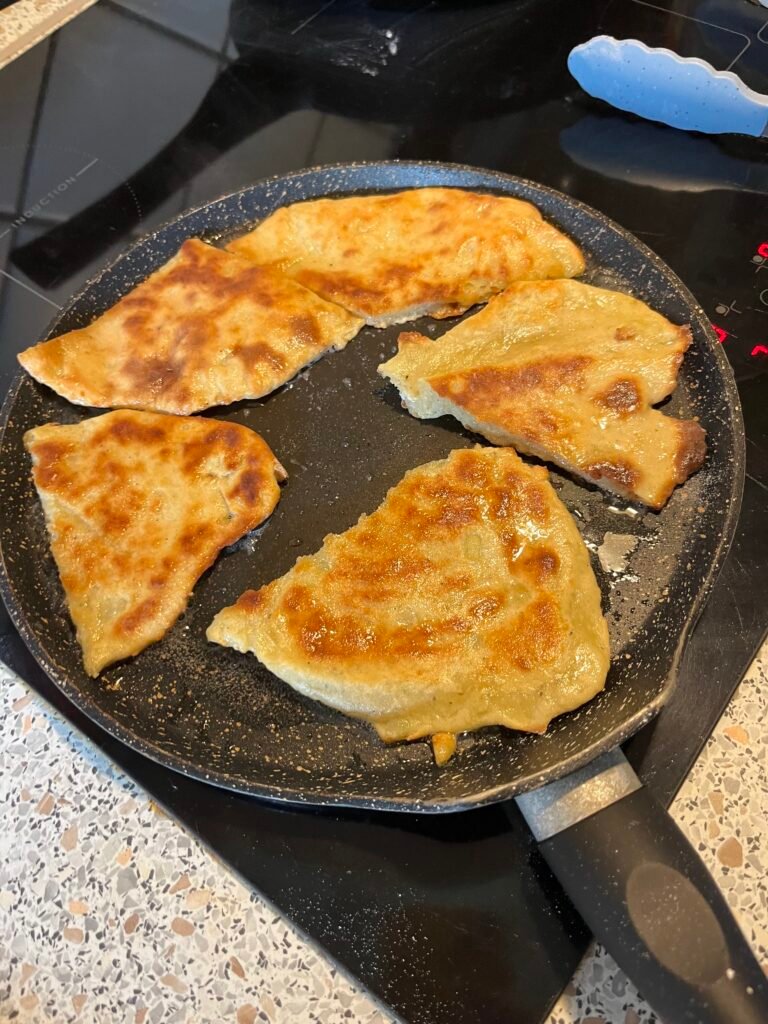
Scottish Tattie Scones
Print Recipe
No Scottish breakfast is complete without tattie scones (tattie is a familiar term for potatoes). These are not like traditional British scones, but more of a potato pancake, and often served with sausage and bread. They're sometimes called potato scones, and you may also hear them called fadge or potato bread in Ireland. No matter the name, tattie scones are quick and easy to make and a clever way to use up leftover mashed potatoes.
Course
Breakfast
Cuisine 
Ingredients
- 450 g potatoes baking potatoes, peeled, cooked, and mashed
- 30 g butter melted, plus more for greasing
- ½ tsp salt
- 125 g flour plus extra for rolling
- 1 medium egg
- 1 tsp baking powder
Instructions
- Heat the oven to 200°C.
- Place the mashed potatoes in a large bowl and add all the other ingredients to form a sticky dough. If the dough is not firm enough, add a little more flour.
- Roll out the dough on a floured surface to approximately 1.25 cm thickness.
- Cut into saucer-sized rounds then score a cross into the dough to mark 4 equal wedges.
- Grease a baking sheet with butter and bake the scones for 20 minutes until golden brown and risen.
- The scones can also be cooked on the stovetop on a griddle or heavy-based frying pan. Cook the scones 5 minutes on either side until golden and risen.
- Serve with butter and eat warm. Enjoy!
Notes
Mashed potatoes made from starchy potatoes work best. The waxy varieties will create either a waxy or a lumpy mash. Traditionally, these work best with either Maris Piper, or King Edward potatoes. Always check that the variety you buy is suitable for mashing.
Ensure that the mashed potatoes are not too wet; don't add too much cream, milk, or butter. Drier mashed potatoes create a dough that will roll out more easily, especially if you include the egg.
If using ready-made mash from the night before (which will already contain milk, butter, salt, and pepper), reduce the amount of butter and salt in the recipe. You may need to add a bit more flour to achieve the right dough consistency, as the ready-made mash might be wetter than freshly mashed potatoes.