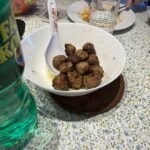
Keftedes, Northern Style
Servings 5
Ingredients
- 500 g minced beef
- 500 g minced pork
- 1 medium onion finely grated
- 2 cloves garlic finely minced
- 2 slices stale white bread crusts removed, soaked in water or milk and squeezed dry
- 1 egg
- 2 tbsp chopped fresh parsley
- 1 tbsp chopped fresh mint or 1 tsp dried
- ½ tbsp dried Greek oregano
- 1 tsp salt
- ½ tsp black pepper
- 1 tbsp red wine vinegar or ouzo for brightness optional
- 50 g plain flour for dusting
- Olive oil for frying
Instructions
- In a large bowl, combine the beef and pork. Add grated onion, garlic, soaked bread, egg, herbs, oregano, salt, pepper, and vinegar/ouzo if using. Mix gently but thoroughly — your hands are the best tool here.
- Cover and refrigerate for at least 30 minutes, ideally an hour. This helps the flavours meld and the mix firm up.
- Roll the mixture into walnut-sized balls (~30–36 total). Lightly dust with flour — this gives a crispy crust.
- Heat olive oil in a wide frying pan — about 1 cm deep. Fry the meatballs in batches over medium heat, turning occasionally until golden brown and cooked through (about 8–10 minutes total per batch). Drain on kitchen paper.
Notes
- Main meal: Serve with oven-roasted lemon potatoes and salad
- Meze style: With pita, dips (hummus, melitzanosalata, tzatziki), olives, and grilled vegetables
What distinguishes Bulgarian kyufteta:
- Summer savoury (чубрица, chubritsa) is the signature herb — often used instead of or alongside parsley.
- Cumin is sometimes added (very lightly), more so in kebapcheta (the oblong, grilled sibling).
- They often include bicarbonate of soda for fluffiness.
- A dash of white wine or vinegar is common in home recipes.
- Served with lyutenitsa (a spicy-sweet red pepper relish) or shopska salad, rather than tzatziki.
Gentle spice enhancements:
- ½ tsp ground cumin — classic in many Balkan meat dishes, earthy and warm
- A pinch of cinnamon or allspice — subtle but very Greek, especially if you're leaning festive
- Chilli flakes or Aleppo pepper — for a touch of heat without overwhelming the herbs
- Paprika — sweet or hot, adds both colour and depth
- 1 grated tomato or a spoonful of tomato paste in the mix
- Roasted red pepper finely chopped into the dough